


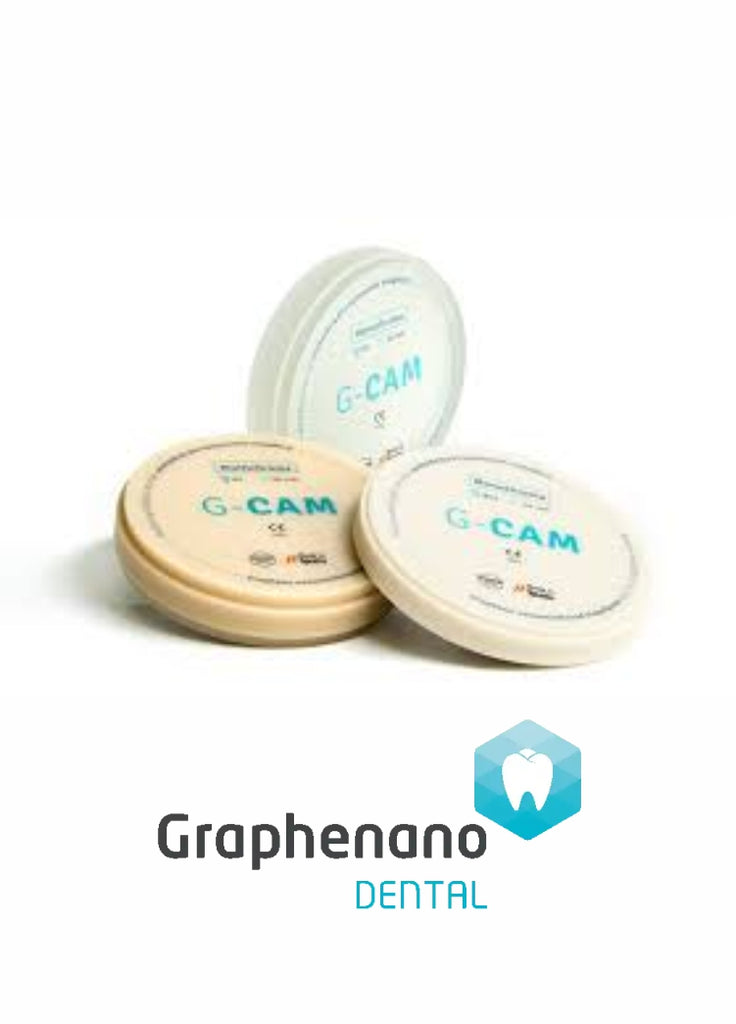
Graphenano Dental
Graphenano Multi-Chroma G-CAM
G-CAM™ Graphene-Reinforced CAD/CAM Disc
Experience the next generation of digital dentistry with G-CAM™, an innovative graphene-reinforced biopolymer disc designed for high-performance CAD/CAM restorations. Combining advanced PMMA technology with medical-grade graphene, G-CAM offers exceptional strength, durability, esthetics, and patient comfort in a lightweight, metal-free solution.
Ideal for a wide range of indications including full-arch implant restorations, complete dentures, overdentures, crowns, bridges, veneers, and long-term provisional restorations, G-CAM delivers outstanding mechanical performance while maintaining a natural appearance and excellent biocompatibility.
 G-CAM combines the proven workability of PMMA with the reinforcing properties of medical-grade graphene, producing a disc that mills cleanly on standard CAD/CAM equipment while resisting fracture under load. The result is a strong, lightweight, metal-free restoration material suited to both provisional and long-term clinical use.
Key Benefits
- Graphene-reinforced PMMA for enhanced strength and fracture resistance
- Lightweight design for improved patient comfort
- Excellent flexural strength and durability
- Metal-free, biocompatible, and bacteriostatic material
- Low water absorption and dimensional stability
- No sintering or firing required, reducing production time
- Available in multiple shades and multichromatic options for natural esthetics
- Compatible with standard CAD/CAM milling workflows
Available Applications
- Full-Arch Implant Prostheses
- Complete and Partial Dentures
- Implant Overdentures
- Crowns and Bridges
- Veneers
- Long-Term Provisionals
- Implant-Supported Restorations
Share this Product
Other great brands


QUESTIONS & ANSWERS
Have a Question?
Be the first to ask a question about this.